Our Big Thinkers series opens with the man who made astrophysics a spectator sport: Neil deGrasse Tyson, director of New York's Hayden Planetarium and host of StarTalk. His one big idea comes from his 2022 book Starry Messenger: Cosmic Perspectives on Civilization — and it fits on an index card.
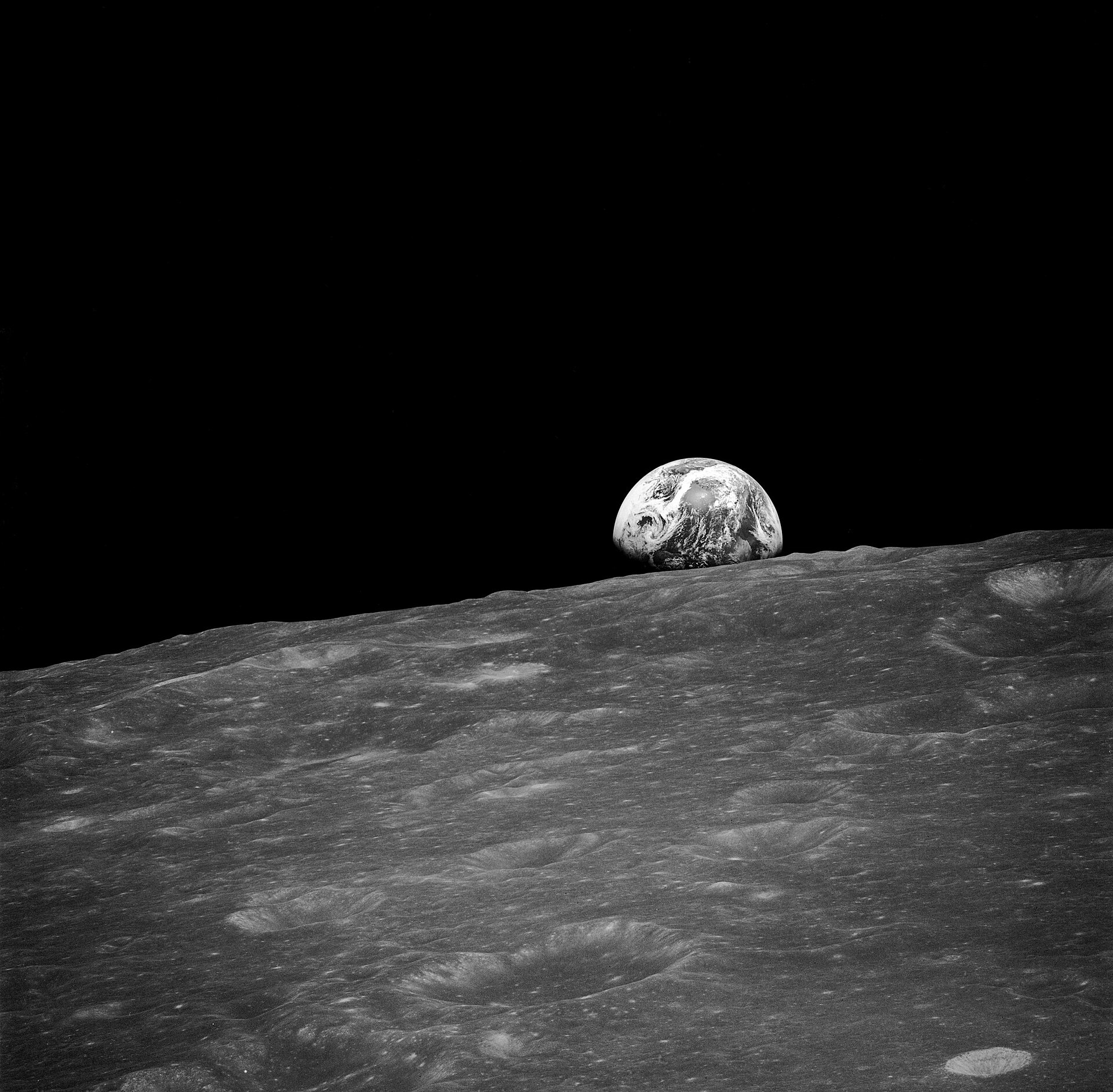
The cosmic perspective is a simple move. First, zoom out: you are a human on a planet orbiting one star among hundreds of billions in a galaxy 100,000 light-years across — itself one of hundreds of billions of galaxies. From that distance, national borders are invisible, and most of our hottest disputes look like ants arguing over a blade of grass.
Then, zoom back in. Tyson's point is not that we are insignificant — quite the opposite. The atoms in your body trace back to stars that exploded billions of years before the Sun was born. As he puts it, the universe is not just out there; it is in us. And the planet is the only ship carrying all eight billion of us.
This isn't poetry to him; it's a decision-making tool. Choices made with the cosmic perspective tend to be species-level and long-term — what keeps the ship flying — rather than tribal and next-quarter. Frame an opinion from facts and reason rather than emotion and bias, he argues, and you get a calmer, more tolerant society almost as a side effect.
Sources: Discover magazine interview, Starry Messenger summary
Nowhere does the cosmic perspective get more literal than with Apophis, a 340-metre asteroid named for the Egyptian god of darkness. On Friday, April 13, 2029 — less than three years from now — it will pass about 32,000 km above Earth's surface, closer than many communication satellites. It won't hit us: NASA has ruled out an impact for at least the next hundred years. But it will be close enough to see with the naked eye from the Eastern Hemisphere — including India — the closest approach by a rock this size in roughly 7,500 years.
Tyson has been telling the Apophis story for nearly two decades. Back in 2007 he described the then-quoted 1-in-45,000 odds of a later impact to Conan O'Brien; that risk has since been retired entirely. NASA's OSIRIS-APEX spacecraft will rendezvous with Apophis weeks after the flyby and study it for 18 months, watching what Earth's gravity does to a tumbling rubble pile.
Sources: NASA JPL on Apophis 2029, NASA on OSIRIS-APEX, Science News on DART
For all his talk of rising above tribalism, Tyson once got a taste of it over a planet. When Pluto began losing its planetary status — first at his own planetarium's exhibits, then officially by the IAU in 2006 — he became the public face of the demotion. The backlash was fierce and pint-sized: he ended up keeping a drawer full of hate letters from elementary schoolchildren, complete with a photograph of an entire third-grade class posed with a banner reading "Dr. Tyson—Pluto is a Planet!"
Even the champion of the cosmic perspective couldn't keep everyone zoomed out. Some fights, it turns out, are too close to home.
Source: Mental Floss, quoting Tyson's The Sky Is Not the Limit
On the evening of April 13, 2029, people across India will be able to step outside and watch a mountain-sized rock slide past the sky — inside the orbits of our satellites, the first time any human has seen such a thing. Tyson's wager is that moments like that change the decider, not just the decision: once you've watched Earth and asteroid share a frame, the next time you argue, you argue like someone on a ship.
Try the move today, minus the asteroid: zoom out to the size of the whole thing, then zoom back into one decision in front of you. Which ones look different?

