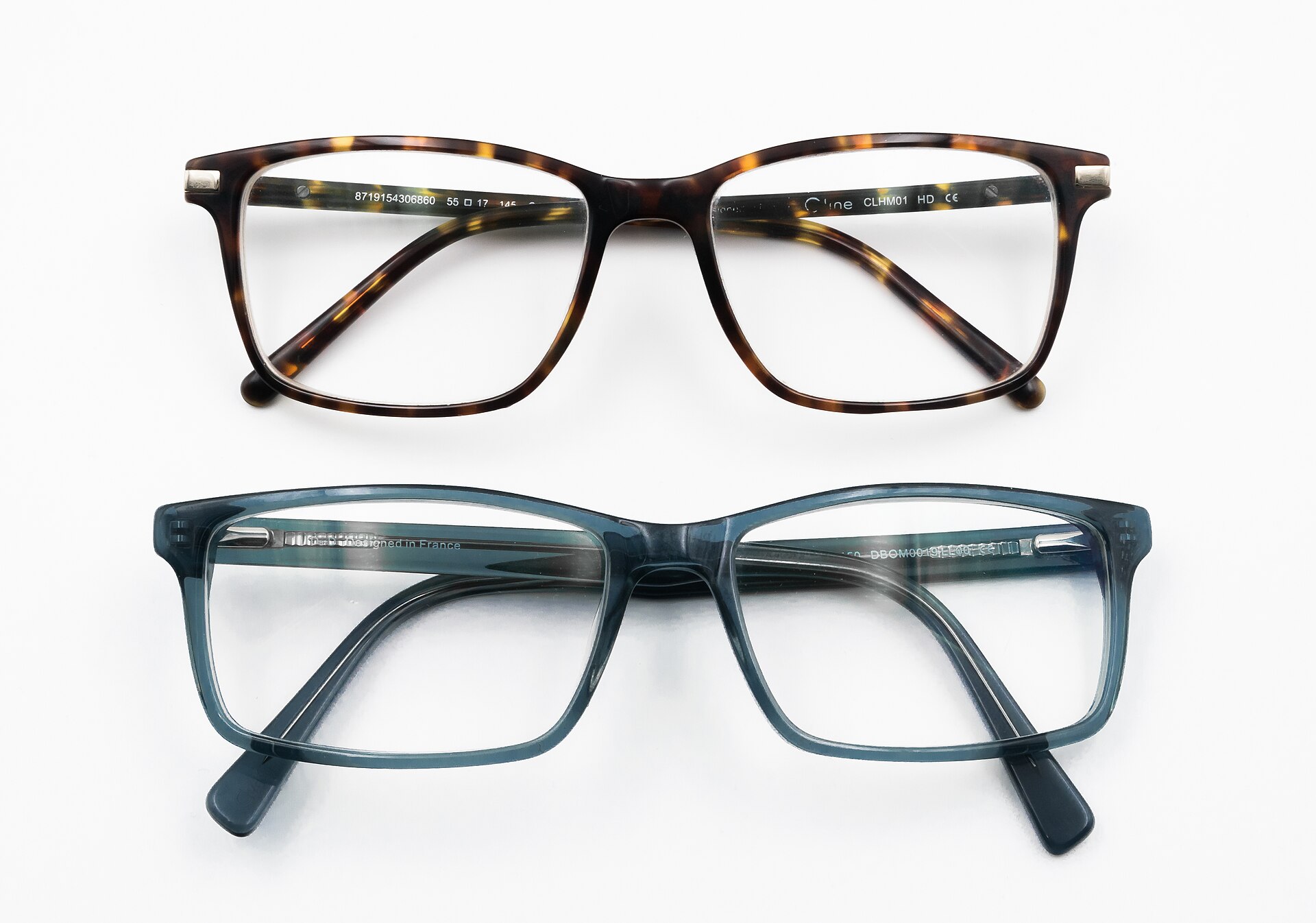
They are sold everywhere now: yellow-tinted or clear lenses that promise to filter the blue light from your screens, ease your tired eyes, and help you sleep. The pitch sounds scientific — screens emit blue light, blue light strains eyes and disturbs sleep, so blocking it should help. It is a tidy chain of logic. The trouble is that the trials, when researchers actually tested it, keep breaking the chain. This is a research-based verdict, not a hands-on test: nobody here wore the glasses for a month and measured anything. The evidence already exists, and it is unusually clear for a consumer-health question.
The strongest evidence is a 2023 Cochrane systematic review — the kind of study that pools every relevant trial and grades the quality of each one. It combined 17 randomised controlled trials from six countries, covering 619 participants, comparing blue-light filtering lenses with ordinary clear lenses. For short-term eye strain from computer use, its verdict was that the filtering lenses probably make little or no difference. Only three of the trials specifically measured visual fatigue, and all three found no significant difference. On visual performance measures such as visual acuity, the difference was essentially zero.
The sleep evidence was messier. Six trials measured sleep, three reported an improvement with filtering lenses and three found no difference, and the review rated the overall sleep evidence as very low certainty — too inconsistent to pool into a single answer. And on the boldest claim, that the lenses protect the retina or macula from long-term damage, there was simply no trial evidence at all: none of the 17 trials measured macular health. The review's lead author, Associate Professor Laura Downie, put the implication bluntly: the results do not support prescribing blue-light filtering lenses to the general population. The American Academy of Ophthalmology takes the same line and does not recommend special blue-blocking eyewear for computer use.
Part of the confusion is that one link in the chain is real. Bright light in the evening genuinely does suppress melatonin and shift the body clock — that is well established, and it is why sleep experts advise dimming lights before bed. But a screen is a weak source compared with daylight: the blue light reaching your eyes from a computer is roughly a thousandth of what you get outdoors, and most everyday blue-light lenses only filter a fraction of it anyway. Wearing lightly tinted lenses in front of a dim screen is a small intervention aimed at a small exposure, and the trials suggest it is too small to matter.
If the lenses are not the answer, the discomfort is still real, and it has a less marketable cause. Staring at a screen, people blink far less often — from roughly 15 blinks a minute down to 5 to 7 — so the eye surface dries out. They also hold a fixed focus at a fixed distance for hours, and sit in dry, air-conditioned rooms. Eye specialists call the cluster digital eye strain or computer vision syndrome, and its drivers are behaviour and environment, not the colour of the light.
What actually helps is unglamorous and free. Follow the 20-20-20 rule: every 20 minutes, look at something 20 feet away for 20 seconds, which breaks the fixed focus and reminds you to blink. Match your screen brightness to the room instead of glaring in a dark room, enlarge text rather than leaning in, and keep the screen slightly below eye level. For sleep, the effective moves are also behavioural: dim the room, stop scrolling earlier, or use your device's built-in night mode, which costs nothing. If your eyes hurt persistently, or your vision changes, that is a reason to see an eye professional — not a reason to buy a filter. This article is general information, not medical advice.
Blue-light glasses are a well-marketed answer to a real problem, aimed at the wrong cause. The Cochrane review of 17 trials found probably little or no benefit for eye strain, no benefit for visual performance, and sleep evidence too inconsistent to trust — and no trial has tested the retinal-protection claim at all. Save the money. Blink more, look away more, dim the room, and let the glasses be ordinary.
Related on Poptani Labs: Are password managers worth it? What the evidence actually says, The Zeigarnik effect: why unfinished tasks haunt your brain, How to run AI locally on your computer. More in this category: Beyond the Hype.
Sources: The Wellness Voyage, on the Cochrane evidence; Acibadem International, the evidence honestly assessed; HOS Documentary, Cochrane review breakdown

