In the winter of 1961, an MIT meteorologist wanted to re-examine one interesting stretch of a weather simulation. Re-running the whole thing would take hours on his slow computer — so he took a shortcut. He started the simulation midway, typing the numbers in from an earlier paper printout. Then he walked down the hall for a cup of coffee.
When he came back, the virtual weather had gone completely insane — diverging so far from the original run that, within a few virtual "months," the two printouts looked like different planets. The shortcut had changed one digit in the third decimal place: the machine's memory held .506127, but the printout read .506. A difference of one part in a thousand — the kind of rounding nobody in 1961 would have thought twice about.
Edward Lorenz was running a simplified 12-variable weather model on a Royal McBee LGP-30, a desktop-sized machine slower than a modern wristwatch, assisted by programmer Margaret Hamilton. He assumed the printout's three-decimal numbers were close enough to restart from — every scientist of the era would have. At first he blamed a faulty vacuum tube; the machine was that primitive.
But there was no malfunction. The equations were nonlinear, and in nonlinear systems, a tiny difference doesn't fade — it amplifies, doubling and redoubling until the future looks nothing like the forecast. Lorenz kept re-running near-identical starting points all day and got a different climate every time.
Lorenz distilled the discovery into his 1963 paper "Deterministic Nonperiodic Flow", published in the Journal of the Atmospheric Sciences — one of the quietest launches of one of the biggest ideas of the 20th century. Its verdict was blunt:
"Two states differing by imperceptible amounts may eventually evolve into two considerably different states… In view of the inevitable inaccuracy and incompleteness of weather observations, precise very-long-range forecasting would seem to be nonexistent."
In plain words: no matter how good your computers get, the weather has a prediction horizon — today about a week — because you can never measure the starting atmosphere perfectly, and the atmosphere magnifies your error.
Sources: Edward N. Lorenz — Wikipedia, APS News, "Circa January 1961: Lorenz and the Butterfly Effect" (via Scienticity)
Here's the fun part: the famous image was never Lorenz's choice. When he later tried to explain the idea, he talked about a seagull's wings disturbing the air. In 1972, preparing a talk for the American Association for the Advancement of Science, he never submitted a title — so his colleague, meteorologist Philip Merilees, made one up: "Predictability: Does the Flap of a Butterfly's Wings in Brazil Set Off a Tornado in Texas?"
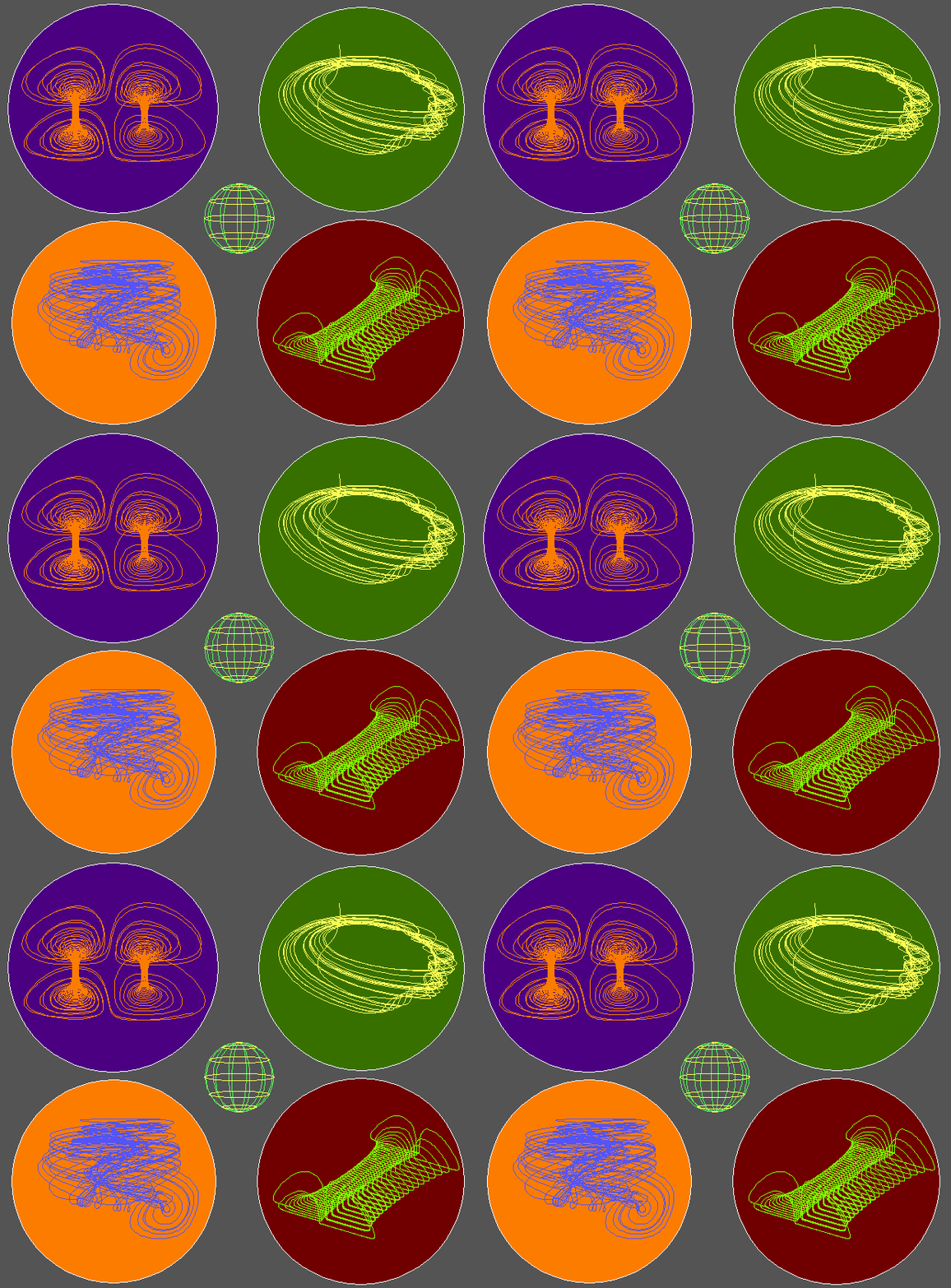
The butterfly stuck. James Gleick's 1987 bestseller Chaos: Making a New Science took it mainstream — and the joke of history is that Lorenz's equations really do trace a butterfly shape: the Lorenz attractor (above) plots as two lobes that look uncannily like a butterfly's wings. A seagull would have sold far fewer books.
And one more thread of small causes: the programmer who helped Lorenz set up that 1961 simulation, Margaret Hamilton, went on to lead the software engineering for NASA's Apollo program — the code that put humans on the Moon. One woman, two discoveries that redefined what's computable and what's not.
Sources: HowStuffWorks — How Chaos Theory Works, Edward N. Lorenz — Wikipedia
Every Thursday this column hunts for small causes with oversized consequences. This one may be the purest example we've found: .506 instead of .506127 — an abbreviation to save printout space — that rewired science's idea of predictability itself. The next time a shortcut worries you, remember: sometimes the shortcut is the whole discovery.

