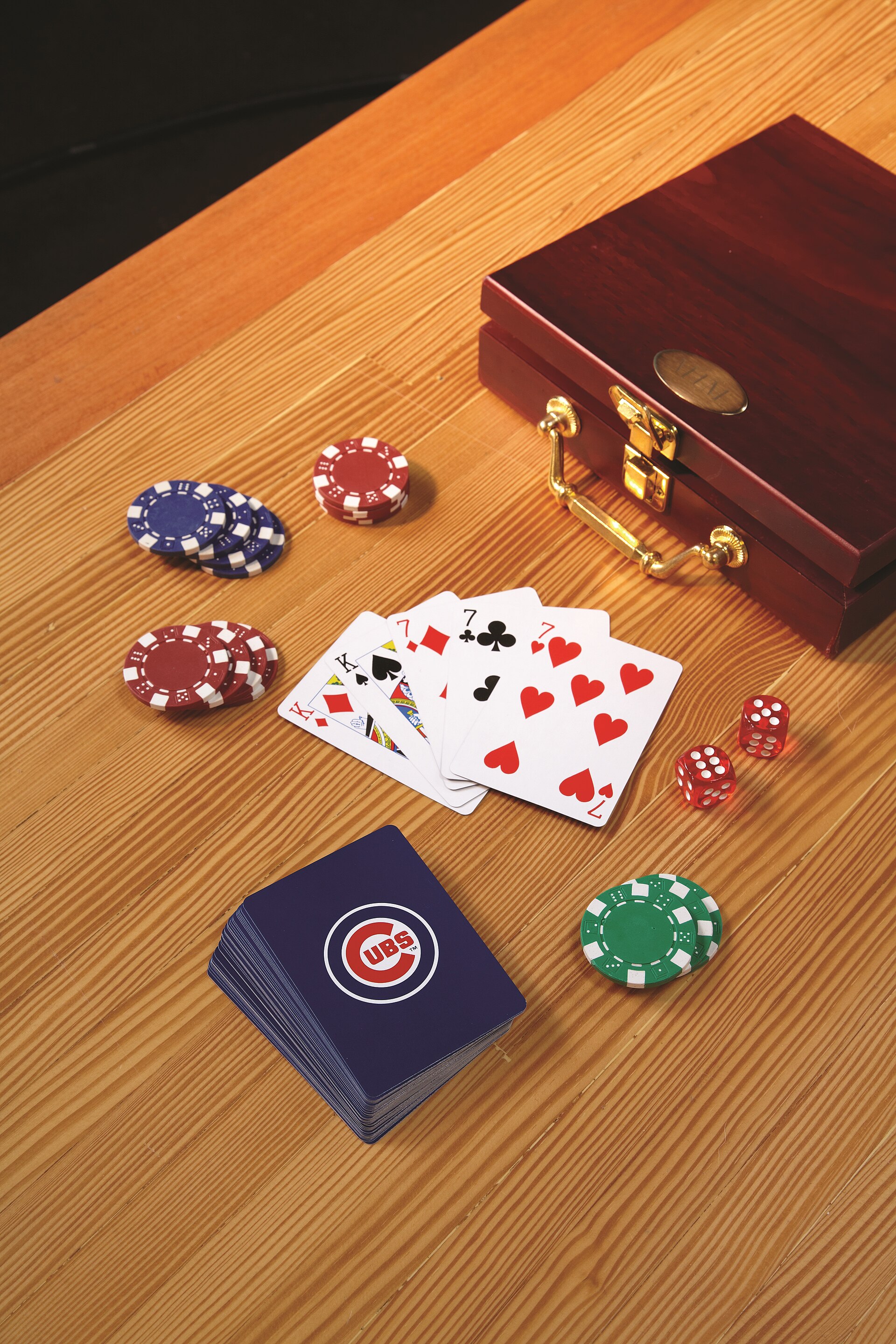
Poker Night is the most-played game on this site: no-limit Texas Hold'em, you against four fictional opponents — Vera, Rusty, Mira and Sam — each starting with 1,000 chips, seen from a first-person seat at the table. The chips are play chips only; there is no real money anywhere in it. It went live on 17 October 2026, and on launch day it had a spectacular flaw: every single hand died the moment the flop landed.
The idea was deliberately small. One table, five seats, no accounts, no lobbies, no waiting for strangers. You sit down with 1,000 chips, the four characters get 1,000 each, and the game runs entirely in your browser — the hand evaluator, the betting, the opponents' decisions, all of it client-side, so a hand never waits on a server. A fullscreen toggle puts you at the table properly, and a sound toggle (on by default) adds Web Audio card and chip sounds, with the mute setting remembered between visits.
Small was the point. A poker game with nothing to install and nothing to lose can be picked up for one hand while dinner cooks — and that is exactly how it gets used.
Here is the fun part, and it is entirely true: on launch day, no hand ever got past the flop. You would be dealt two cards, the betting would run, three community cards would land — and the game would stop dead. Every hand, without exception.
The cause was a mismatch in the hand evaluator. Texas Hold'em is a seven-card game at showdown (two hole cards plus five community cards), but at the flop there are only five cards on the table in total. The evaluator was running its seven-card logic on a five-card board, and the result was a crash rather than a hand. The fix was to evaluate the hand correctly for the cards actually available at each street — five-card logic at the flop, seven-card logic once the board fills out. It was repaired the same day, and it changed how interactive things get shipped here: a game is now playtested with real hands, real clicks, all the way through a full hand, before it goes live. A screenshot of a poker table tells you nothing; a played hand tells you everything.
The other decision that defines the game is what happens when someone goes broke. A busted AI opponent never comes back — its seat dims and stays dim for the rest of the table. Only you, the human, may rejoin, through a "Rejoin this table?" prompt that puts you back in with a fresh 1,000 chips while your opponents keep whatever stacks they have earned.
That asymmetry is deliberate. If the AI players re-bought forever, no table would ever end and no win would mean anything. Because they don't, clearing all four opponents produces a genuine finish: a "You own this table" win screen. Losing, too, keeps its sting — rejoining costs you the table position you had built, even though the chips are free. Play chips only, but consequences intact.
Above the action feed sit per-hand recap cards, newest first, capped at eight: each hand gets a WIN, LOST or FOLDED badge, and winning hands get a gold border. Showdown statistics count a hand won exactly once, however the hand ends — a small rule that took a fix of its own, because an early version kept inflating the win count on tables already in progress. The result is a game that remembers your session the way a real table remembers a night: who won what, who folded when, and who is still standing.
Play it: Poker Night on Poptani Labs — no sign-up, play chips only.
Poker Night's launch taught the lab its standing rule: never ship an interactive thing you have not played yourself, all the way through, with real clicks. The table looked finished. The flop proved it wasn't. The difference between a demo and a game is exactly one full hand — and the only way to know which one you have built is to sit down and play it.

