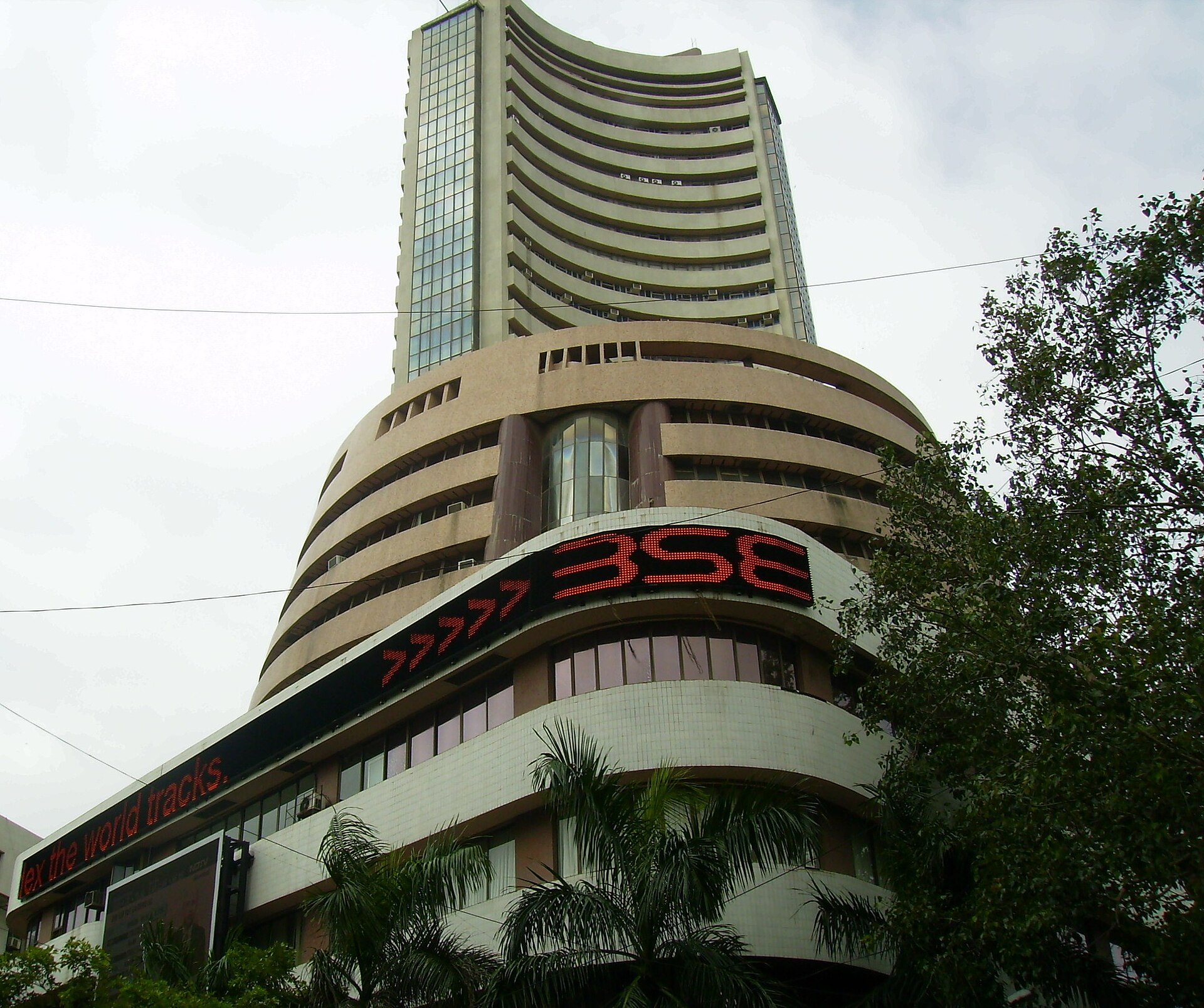
Monday, October 26, opened like a continuation of everything investors have disliked about October: the Sensex slipped over 100 points at the open, fell more than 500 points intraday, and the Nifty dropped below 22,500. By the closing bell, the story had flipped completely. The Sensex gained 482.92 points (0.66%) to 73,606.75 and the Nifty 50 rose 153.20 points (0.68%) to 22,753.20, snapping a four-day losing streak. From its intraday low of 72,514.57, the Sensex travelled more than 1,000 points back up — a round trip that says a lot about who is buying Indian stocks right now.
The early weakness had familiar culprits: soft global cues, crude oil still above $100 a barrel, and nerves ahead of the US Federal Reserve’s policy meeting. The Nifty touched 22,387.35 in early trade. Then dip-buying took over in pharma, metals and heavyweight stocks, and the afternoon session belonged to the buyers. Breadth finished positive — about 1,925 stocks advanced against 1,427 that declined on the NSE — and mid-caps and small-caps did even better than the benchmarks, with the Nifty 500 up 0.85%.
Not everything joined the party. Metals led the sector indices, up 2.21%, while media was the weakest at −0.34%. Bank Nifty managed only 0.15%, a reminder that banks — fresh from a mixed earnings season — are not leading this recovery yet. And the India VIX, the market’s fear gauge, actually rose 1.78% to 17.16 even as prices climbed: a rally, but a nervous one.
Sources: The Hindu BusinessLine, Flash Finance, MarketPing
Provisional exchange data put foreign investors as net sellers of ₹1,462 crore in the cash market on Monday, while domestic institutions bought ₹2,610 crore. It is the pattern that has defined 2026: reporting dated October 25 put October’s cumulative FPI equity outflow at about ₹48,056 crore through October 23, and calendar-2026 outflows at roughly ₹3.08 lakh crore. Domestic money — SIP flows and institutional buying — keeps absorbing that supply, which is why the market bends instead of breaking.
Sources: MarketPing, Kalkine
The day’s loudest earnings story came from two wheels. Ather Energy posted its first-ever quarterly net profit — ₹1.26 crore consolidated (₹1.50 crore standalone) for the September quarter, against a ₹154.07 crore loss a year earlier. Revenue from operations jumped 62.9% to ₹1,464.24 crore, and the stock hit its 10% upper circuit at ₹1,518 on the NSE. The company also approved about ₹122 crore of capacity expansion: its Hosur plant ran at 98% of peak capacity during the quarter, and Factory 3.0 at Chhatrapati Sambhajinagar gets a bigger build-out.
Public-sector banks kept their strong run going. Bank of Maharashtra’s net profit rose 41.4% to ₹2,310 crore, its highest in eight quarters, with net interest income up 22% and gross NPAs improving to 1.25%. Indian Overseas Bank’s standalone profit rose 56% to ₹1,912.42 crore, and ITC Hotels’ net profit rose 17% to ₹207.42 crore. On the other side, Tata Consumer’s profit dipped to ₹242.81 crore, and Hyundai Motor India said it targets 1.14 million units of annual capacity by 2030 with 92% localisation by 2032.
Sources: The Hindu BusinessLine (Ather), TradingView (Ather), TradingView (Bank of Maharashtra), The Hindu BusinessLine (Q2 live blog)
Ather sold 93,211 vehicles in the quarter and made ₹1.26 crore of consolidated profit. Divide one by the other and you get roughly ₹135 of profit per scooter — on a product that sells for well over a lakh. The profit is real, and the milestone matters, but it rests partly on ₹62.7 crore of other income: operating revenue alone (₹1,464.24 crore) did not cover total expenses (₹1,525.69 crore). The next few quarters will show whether the scooter business itself can carry the profit — or whether this was a photo-finish.
Monday rewarded the patient and punished the panicked — in the same session. The investors who sold at 10 AM watched the market close 1,000 Sensex points above the low. That is not an argument to never sell; it is an argument to know why you are selling before the opening bell forces the decision for you.
Don't just read about it — run the numbers on your own money with the same calculators this post draws on.

