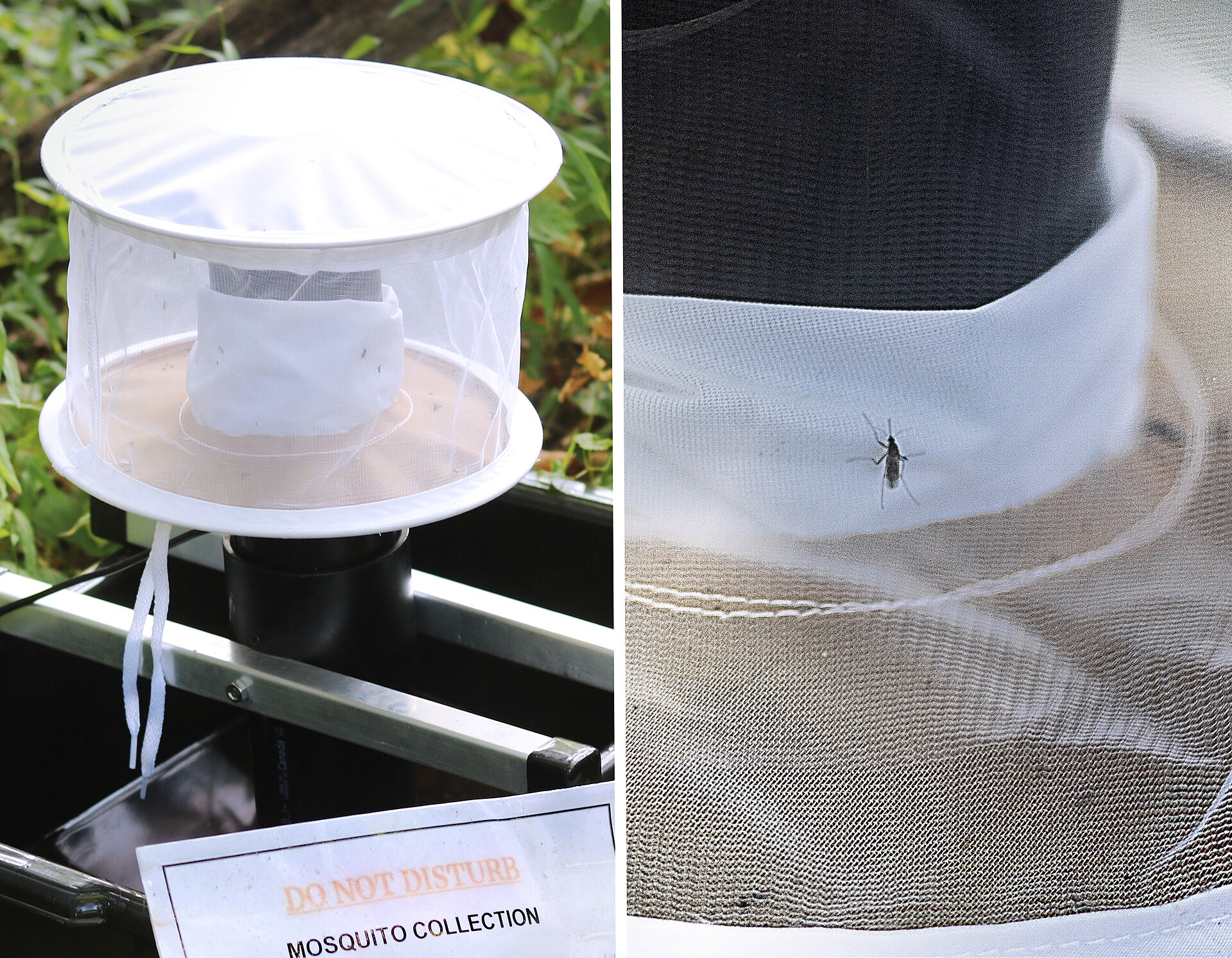
If you could press a button and make every mosquito on Earth vanish, would you? The case for pressing it is strong. Mosquitoes kill more people than any other animal — not by being large or venomous, but by carrying disease. Malaria alone killed an estimated 610,000 people in 2024, across 282 million cases, according to the World Health Organization, and about 95% of those deaths were in Africa, mostly children under five. Dengue hit a record 14.6 million reported cases in 2024, with more than 12,000 deaths. Add yellow fever, Zika, West Nile, Japanese encephalitis and chikungunya, and the toll is staggering. So why hasn't anyone done it? Because the answer turns out to be messier than the question. This is a research-based look at what would actually happen, drawn from the WHO and a 2010 survey of ecologists in Nature.
The human case for eradication needs little embellishment. Malaria's 610,000 deaths in 2024 came despite decades of bed nets, spraying and new vaccines — progress, the WHO says, is under threat from drug resistance and funding cuts. Dengue now puts about half the world's population at risk, and its record 2024 was driven by a warming climate expanding the mosquitoes' range. Yellow fever still kills around 30,000 people a year. These are not numbers from a horror film; they are the annual background toll of a creature most of us think of as a minor annoyance. Only female mosquitoes bite — they need the protein in blood to develop their eggs; males feed on nectar. And only a tiny fraction of mosquito species are the problem: of roughly 3,500 named species, only a couple of hundred bite or bother humans at all, and only a handful carry disease. The question, then, is not really about all mosquitoes. It is about a few dozen species — and whether the rest matter enough to keep.
They do, though it is a modest one. Both sexes feed on nectar, and some species are effective pollinators — including of the blunt-leaf orchid, Platanthera obtusata, in the far north. Mosquito larvae are a bigger deal: they filter-feed on algae and organic matter in ponds and pools, and they are food for a great many things. As entomologist Bruce Harrison told Nature in 2010, "in the absence of their larvae, hundreds of species of fish would have to change their feeding behaviour". The same survey found that no species is known to depend solely on mosquitoes — in most places, other insects would fill the gap, and the ecological scar would probably heal quickly. But the survey also found the scientists disagreed, and the disagreement centred on one place: the Arctic tundra, where mosquito swarms are so thick they shape the behaviour of entire herds.
In the far north, mosquitoes are not a nuisance; they are a force of nature. Caribou choose wind-facing paths and high ground to escape the swarms, and those choices change where they graze, which changes the vegetation. The clouds can be so thick they can asphyxiate caribou, and a single animal in a herd can lose up to 300 ml of blood a day to them. Migratory birds that nest in the tundra gorge on mosquitoes to feed their chicks — one estimate in Nature's survey suggested their numbers could drop by more than half without mosquitoes to eat, though other researchers disputed the figure. It is the one place on Earth where removing mosquitoes might genuinely rewire an ecosystem, and it is also the place where mosquitoes cause humans the least harm. The Arctic is the exception that keeps the question interesting.
The fun anecdote that made this question famous came from Bill Gates. In 2014 he published a chart ranking animals by how many humans they kill each year, and the mosquito sat at the top — about 725,000 deaths a year from mosquito-borne disease, against 475,000 humans killed by other humans, 50,000 by snakes, 25,000 by dogs and 10 by sharks. (The 725,000 figure is from 2014 and is now dated — the WHO's current malaria-only figure is 610,000 — but the ranking has not changed.) Smithsonian's write-up put it plainly: "No other species, including our own, is responsible for the loss of as many human lives each year as mosquitoes are." Gates's chart is why the eradication question keeps being asked, and why Nature asked its ecologists in the first place. Their answer, in 2010, was a cautious shrug: the world would probably cope, the Arctic might not, and the species that matter are few. Sixteen years later, the question is still open — not because we cannot kill mosquitoes, but because we have never quite decided which ones, and what we are willing to lose with them.
Pressing the button for every mosquito would save hundreds of thousands of lives a year — and probably cost the world less, ecologically, than we fear. But the honest version of the question is narrower: wipe out the handful of species that carry disease, and leave the other 3,400 alone. The button, it turns out, was never the right tool. The real question is not whether mosquitoes should exist, but which ones — and that is a much more interesting argument than a button.
Related on Poptani Labs: What if humans could photosynthesize?, What if we found life on Mars tomorrow?, What if you fell into a black hole?. More in this category: What If?.
Sources: WHO: new tools saved a million lives from malaria last year (World Malaria Report 2025), WHO fact sheet: dengue and severe dengue, Fang, J., 'A world without mosquitoes', Nature 466, 432–434 (2010), Mosquitoes kill more humans than human murderers do (Smithsonian), 14 not-so-fun facts about mosquitoes (Smithsonian)

