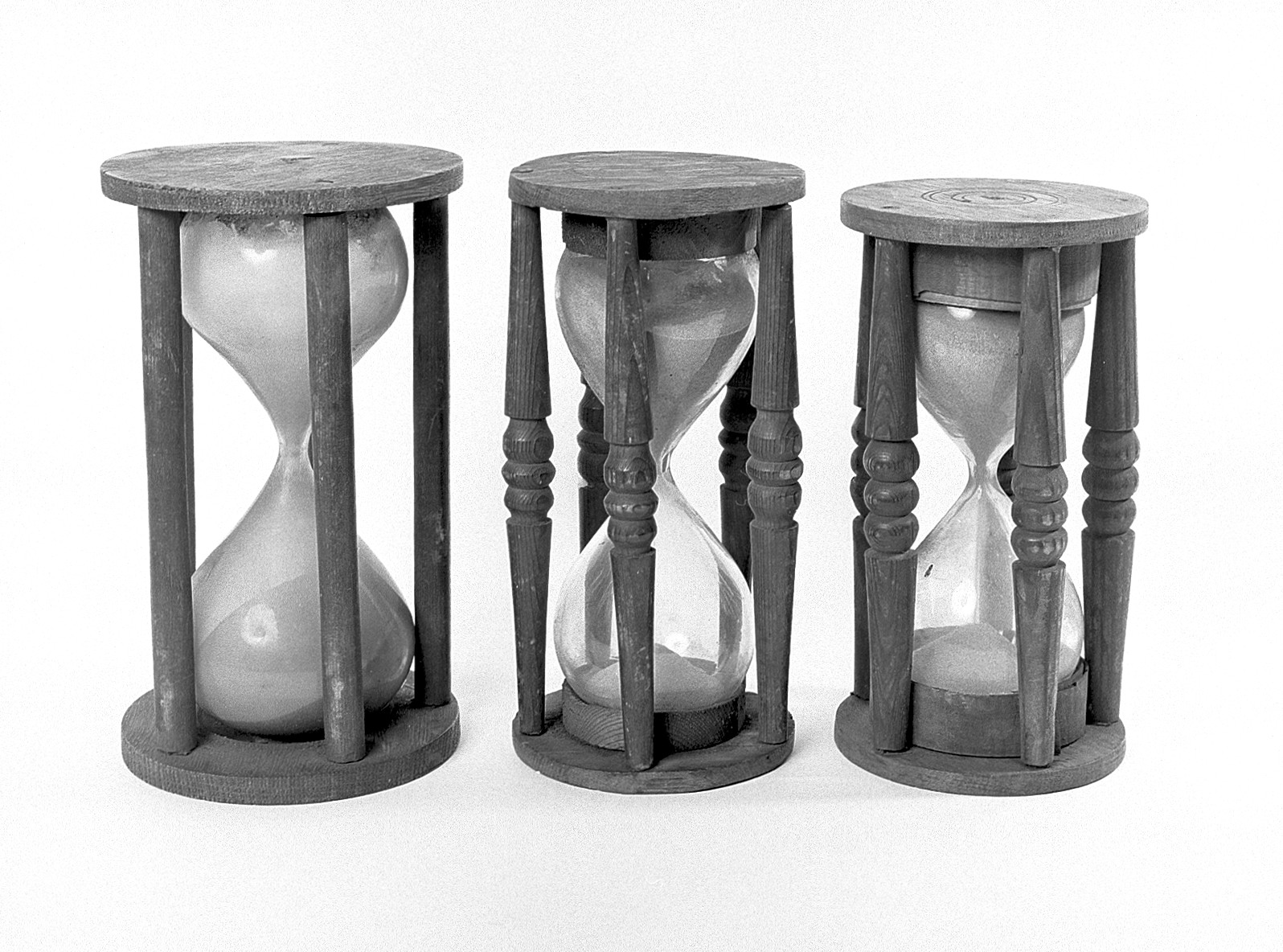
You know the deadline. You know the delay will make things worse. You can feel the stress building — and you still don't start. That is the central puzzle of procrastination: it is not ignorance. Procrastinators are usually keenly aware of both the task and the cost of avoiding it.
The ancient Greeks had a word for this gap between knowing and doing: akrasia, acting against your own better judgment. Modern psychology has studied it for decades, and the findings point somewhere surprising: procrastination looks less like a time-management failure and more like an emotion-management failure — with a brain that systematically discounts the future.
The most useful reframing comes from psychologists Fuschia Sirois and Tim Pychyl: procrastination is fundamentally about regulating emotions, not managing time. When a task triggers boredom, frustration, or fear of being judged, putting it off delivers instant relief. The cost — a worse outcome later — feels distant and abstract, so the brain takes the deal.
That explains why the usual advice backfires. A stricter schedule doesn't help if the problem was never the schedule. And shaming yourself for delaying tends to make things worse, because shame is one of the very emotions that drives avoidance — worth remembering next time embarrassment flares up over an unfinished task (we've written before about how embarrassment lies to us).
Sources: Solving Procrastination — theories of procrastination, When Notes Fly — the psychology of procrastination
A second mechanism stacks on top of the first: present bias. Humans reliably overvalue immediate rewards and undervalue future ones — a reward next week feels far less motivating than the same reward today, even when we know better in the abstract.
Psychologist Piers Steel built this into Temporal Motivation Theory, which sums up motivation as a rough equation: Motivation = (Expectancy × Value) / (Impulsiveness × Delay). In plain language: you act when you expect to succeed, when the task feels worthwhile, and when the payoff is near. Summaries of Steel's large meta-analysis put chronic procrastination at roughly 15–20% of adults, with task unpleasantness, impulsiveness, low confidence, and low conscientiousness among the strongest predictors. Hal Hershfield's UCLA work even suggests we perceive our future selves almost like strangers.
Sources: Solving Procrastination — theories of procrastination, When Notes Fly — the psychology of procrastination
For a true story of someone fighting exactly this machinery, consider Victor Hugo in 1830. A year earlier he had agreed to deliver a new novel, The Hunchback of Notre-Dame — and instead spent the year entertaining guests and writing almost nothing. The publisher set a hard deadline of February 1831, with a steep fine for every week of delay.
Hugo's response was drastic: he bought a large grey shawl, had his formal clothes locked away so he could not go out or receive guests, and worked through the winter in what his wife Adèle later described as entering his novel "as if it were a prison." He finished on January 14, 1831, weeks ahead of the deadline.
Modern psychologists would call Hugo's trick a commitment device: instead of relying on willpower at the moment of temptation, he changed the situation in advance so giving in became difficult. You don't need a shawl — the same logic sits behind website blockers or a phone left in another room. The trick works because it acts on the environment, not on motivation.
Source: The Ladders — Victor Hugo's house-arrest strategy (which cites Alfred Barbour's 1883 biography of Hugo)
The technique with the strongest evidence base is almost embarrassingly simple: the if–then plan, or "implementation intention," developed by psychologist Peter Gollwitzer. Instead of "I intend to work on the report," you decide: "When I finish lunch, I will open the report and write three rough bullet points." The cue does the starting for you.
A 2006 meta-analysis by Gollwitzer and Paschal Sheeran, pooling 94 studies with more than 8,000 participants, found that if–then plans improved goal attainment with a medium-to-large effect (d = .65) beyond merely holding the goal. The mechanism fits the diagnosis: procrastination usually fails at initiation, and a pre-decided cue bypasses the deliberation where delay happens.
Two honest caveats. First, the cue must be specific and inevitable — "when I feel ready" is not a cue; "when I close my laptop after my last meeting" is. Second, effects vary by domain, are smaller for difficult long-term goals than for one-off actions, and a plan for a goal you don't actually hold does nothing. An if–then plan is a starter motor, not an engine.
Source: How to Stop Procrastinating — Gollwitzer & Sheeran (2006), explained
So the next time you catch yourself delaying something you fully intend to do, read the delay as information rather than a verdict on your character. What is the task making you feel — boredom, anxiety, confusion, dread of judgment? Is the first step too big, the payoff too distant, the distraction too close? Each answer points to a fix: shrink the step, clarify the instruction, block the distraction, or set a near-term checkpoint.
And if the delay keeps returning to the same task, consider that the task itself may be the problem: too vague to start, too large to face, or no longer the right goal at all. Restructuring the work is often more productive than blaming the worker — even when the worker is you.
One note of proportion: this is general psychology, not medical advice. Persistent difficulty with everyday functioning is worth discussing with a professional rather than solving with productivity tricks. For the ordinary version — the report, the application, the chore — don't fight your feelings about the task with willpower. Change the setup, decide the first step in advance, and let the cue do the starting.
Related reading: Nobody noticed: the spotlight effect, and why embarrassment lies to you · Dinner with the dead: how BoJack Horseman staged its bravest 26 minutes (avoidance, dramatised) · More in The Human Operating System

