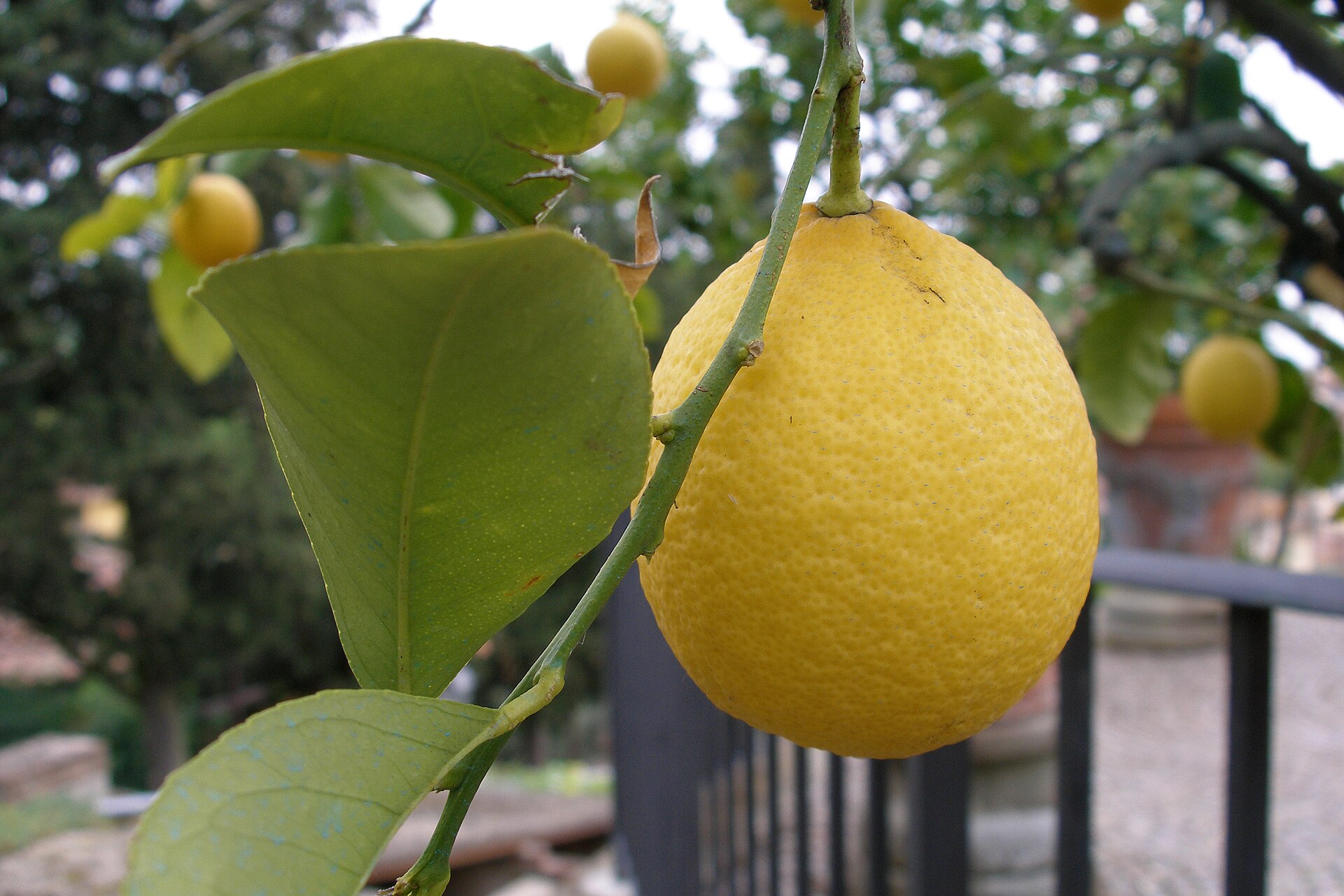
On January 6, 1995, McArthur Wheeler and Clifton Earl Johnson robbed two banks in the Pittsburgh area in broad daylight, at gunpoint, wearing no masks and making no attempt to disguise themselves. Instead, they had smeared lemon juice on their faces. Their reasoning was that lemon juice works as invisible ink — write with it, let it dry, and the marks stay hidden until heat is applied — so it should also make a face invisible to security cameras. Wheeler had even tested the idea beforehand, taking a Polaroid of his lemon-smeared face and concluding the trick worked. When police later showed him the surveillance footage, he was stunned. "But I wore the juice," he protested. This is a research-based retelling from the sources below, and it is the true story behind one of psychology's most quoted findings.
The story might have been forgotten if Cornell social psychologist David Dunning had not come across it — a brief account appeared in the 1996 World Almanac, and a longer article ran in the Pittsburgh Post-Gazette. Dunning's reaction, as later retold, was that if Wheeler was too unskilled to be a bank robber, perhaps he was also too unskilled to know it. With his graduate student Justin Kruger, he set out to test whether that pattern held generally. Their 1999 paper, "Unskilled and Unaware of It: How Difficulties in Recognizing One's Own Incompetence Lead to Inflated Self-Assessments", tested Cornell undergraduates on humour, grammar and logical reasoning, then asked them to estimate their own performance. The headline result: people in the bottom quartile scored around the 12th percentile but estimated themselves at about the 62nd. Top performers, meanwhile, slightly underestimated themselves. Dunning's explanation was elegant: the skills needed to produce a correct answer are often the very skills needed to recognise one — so the least skilled suffer a double burden, getting it wrong and being unable to tell.
Almost every popular version of the finding adds something the paper never contained. The famous chart — confidence soaring to a "Peak of Mount Stupid", crashing into a "Valley of Despair", then climbing a "Slope of Enlightenment" — does not appear in Kruger and Dunning's work at all. The original charts were plain lines across four skill groups: actual performance climbing steeply, perceived performance barely rising. The study also never followed anyone over time, so it says nothing about a learner's journey from beginner to expert; it compared different people at a single moment. And the effect itself is debated: critics, including Gignac and Zajenkowski in 2020, argue much of the pattern is a statistical artefact driven by regression to the mean, while a 2021 model comparison found it is not only that. The honest version is narrower than the meme — and more interesting for it.
The finding was never a licence to diagnose other people. It was measured on specific tests, not general intelligence, and it describes a tendency, not a fate. Its practical use points inward: in any domain where you have not yet tested yourself against an outside standard, your self-assessment is the least reliable evidence available. Seek the outside standard — a marked test, a coach, a result that does not care about your feelings. Wheeler's mistake was not that he was foolish; it was that his only test was one he had designed himself, and he graded it himself. Everyone does some version of that. The defence is not humility in the abstract. It is a second opinion from reality.
The Dunning-Kruger effect endures because it names a real trap: the less you know about something, the harder it is to notice the gap. The cure is not to assume you are the exception. It is to build, for anything that matters, a check that does not depend on your own judgement.
Related on Poptani Labs: Why do we procrastinate even when we know better?, The Zeigarnik effect: why unfinished tasks haunt your brain, The spotlight effect. More in this category: The Human Operating System.
Sources: Wikipedia, 1995 Greater Pittsburgh bank robberies; Glaucoma Today, on Wheeler and the 1999 study; Morso, what the research shows — and the Mount Stupid myth

