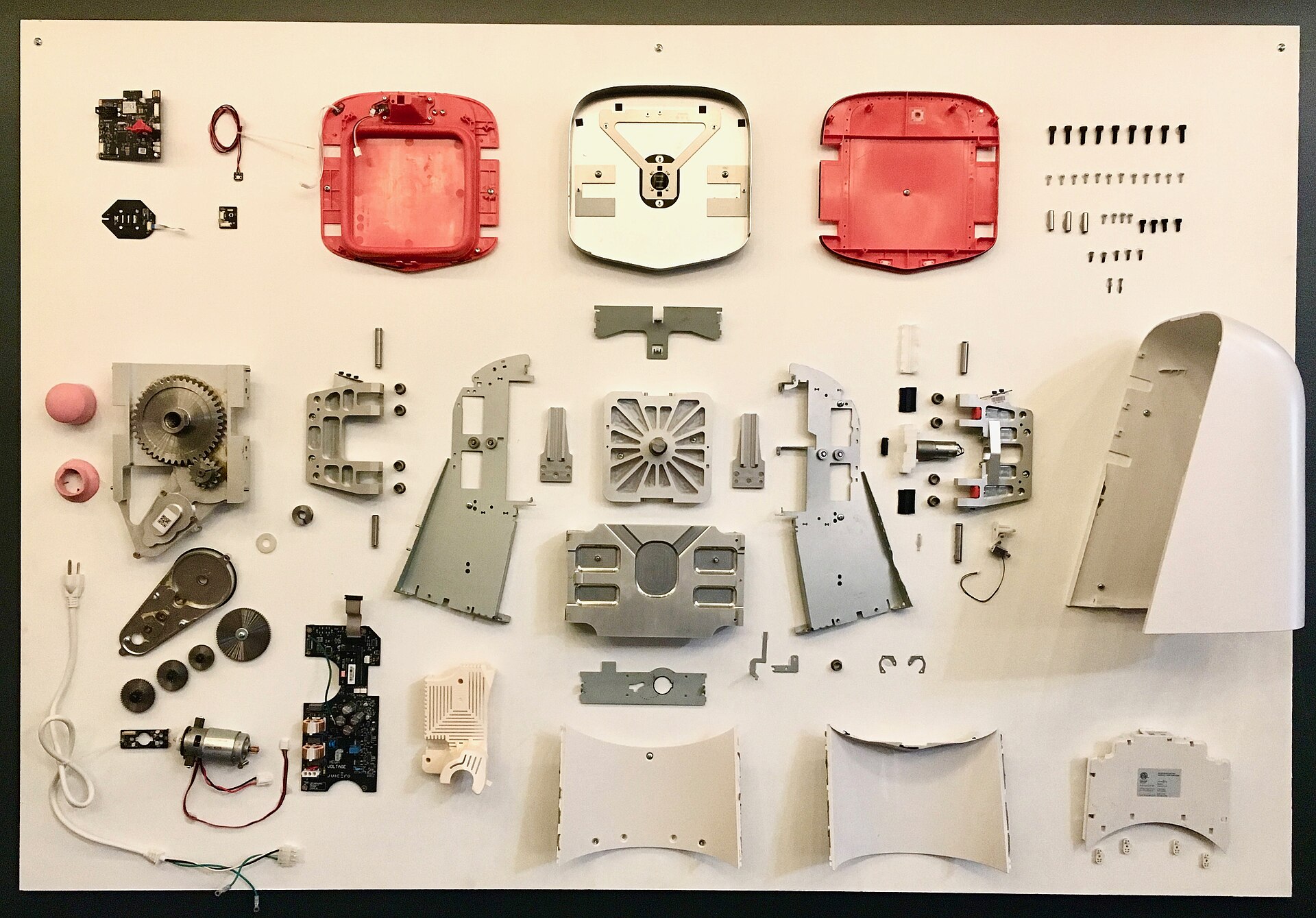
This is a research-based evaluation: nobody can test a Juicero Press hands-on any more — the company is gone — so everything here comes from the reporting at the time, the company's own statements, and the post-mortems that followed. It is worth retelling anyway, because Juicero is the cleanest example Silicon Valley has produced of a simple question nobody asked until it was too late: does this machine do anything your hands cannot?
Juicero was founded in San Francisco in 2013 by Doug Evans, a raw-food evangelist who had helped build Organic Avenue, a chain of juice bars. His idea was to take the faff out of cold-pressed juice: chopped fruit and vegetables sealed into single-serve packs, delivered by subscription, and a sleek countertop press to squeeze each one. Evans boasted the press exerted four tons of force — enough, as Bloomberg reported, to lift two Teslas. Investors bought the vision: about $120 million from Google Ventures, Kleiner Perkins, Campbell Soup's venture arm and others. The press launched in March 2016 at $699, with packs at $5 to $8 each, sold only to press owners. Not every hyped kitchen gadget is a dud — the air fryer, for all its marketing budget, is at least a genuinely useful small oven — but Juicero's pitch rested on a machine doing something only it could do.
The press, designed by Yves Behar's studio Fuseproject, packed some 400 custom parts into a countertop box: a scanner, a microprocessor, a Wi-Fi chip and antenna. Each pack carried a QR code, which the press scanned and checked online against a database — if the pack had expired or been recalled, the machine refused to run. So the press was not just a squeezer; it was a gatekeeper. You could not buy the packs without the press, and the press would not work without the packs, a subscription and a Wi-Fi connection.
The price told the story of demand. In January 2017, ten months after launch, Juicero cut the press from $699 to $399 — a cut that came 12 to 18 months ahead of schedule, because sales were slow. Even at $399, every glass still cost $5 to $8 in packs.
It is easy to laugh now, but the pitch had a logic. The Keurig model — a cheap machine and expensive pods — had already made billions, and cold-pressed juice was a premium daily habit in the Bay Area. Juicero's backers were not really betting on a juicer; they were betting on a subscription to fresh food, delivered weekly, with the press as the lock-in. The mistake was subtler than "nobody wants juice": the company spent four years and about $120 million perfecting the lock before checking whether the door needed one.
On 19 April 2017, Bloomberg reporters Ellen Huet and Olivia Zaleski ran the obvious test nobody at the company seems to have done in public: they picked up a produce pack and squeezed it with their bare hands. They got 7.5 ounces of juice in about 90 seconds. The $400 press produced about 8 ounces in two minutes. The clip went viral overnight, and the joke wrote itself: a $120 million company had built a machine that lost a race to two hands.
The company's defence made it worse. Jeff Dunn — the former president of Coca-Cola North America who had taken over as chief executive from Evans in October 2016 — argued that hand-squeezing was a messy, inferior experience and that the press was worth more than a glass of juice. Even one of Juicero's own investors conceded to Bloomberg that the packs could be squeezed without the machine. The next day, Juicero offered refunds to all customers.
On 1 September 2017, about four and a half months after the Bloomberg story, Juicero announced it was suspending sales of the press and the packs immediately and looking for a buyer. Its statement said it had sold over a million produce packs — but the packs were the only part customers actually wanted, and the company had never found a supply chain cheap enough to sell them profitably without the expensive press in front. Juicero suspended sales a year and a half after launch, and the company was wound up by December 2017. It was not the last gadget to learn the lesson the hard way — the Humane AI Pin, a $699 device that became a paperweight within a year, repeated the pattern with a different kind of promise.
Juicero's failure was not that the juice was bad, or that the engineering was shoddy — by most accounts the press was beautifully built and the juice was fine. The failure was that the product solved a problem nobody had. Chopping, bagging and delivering the produce was the real innovation; the press added almost nothing except a $399 toll booth in front of it. The test is worth keeping for the next shiny gadget: if a pitch needs four tons of force and a Wi-Fi connection to do a job your hands already do, ask what the machine is actually for.
Related on Poptani Labs: The Humane AI Pin: the $699 gadget that became a paperweight in 10 months, Air fryers: the small oven with a big marketing budget. More in this category: Beyond the Hype.
Sources: Silicon Valley's $400 Juicer May Be Feeling the Squeeze, Juicero - Wikipedia, Squeezed out: widely mocked startup Juicero is shutting down, The Failure Awards for defunct branding: #4 Juicero, Company behind Yves Behar's hard-pressed Juicero machine shuts down

