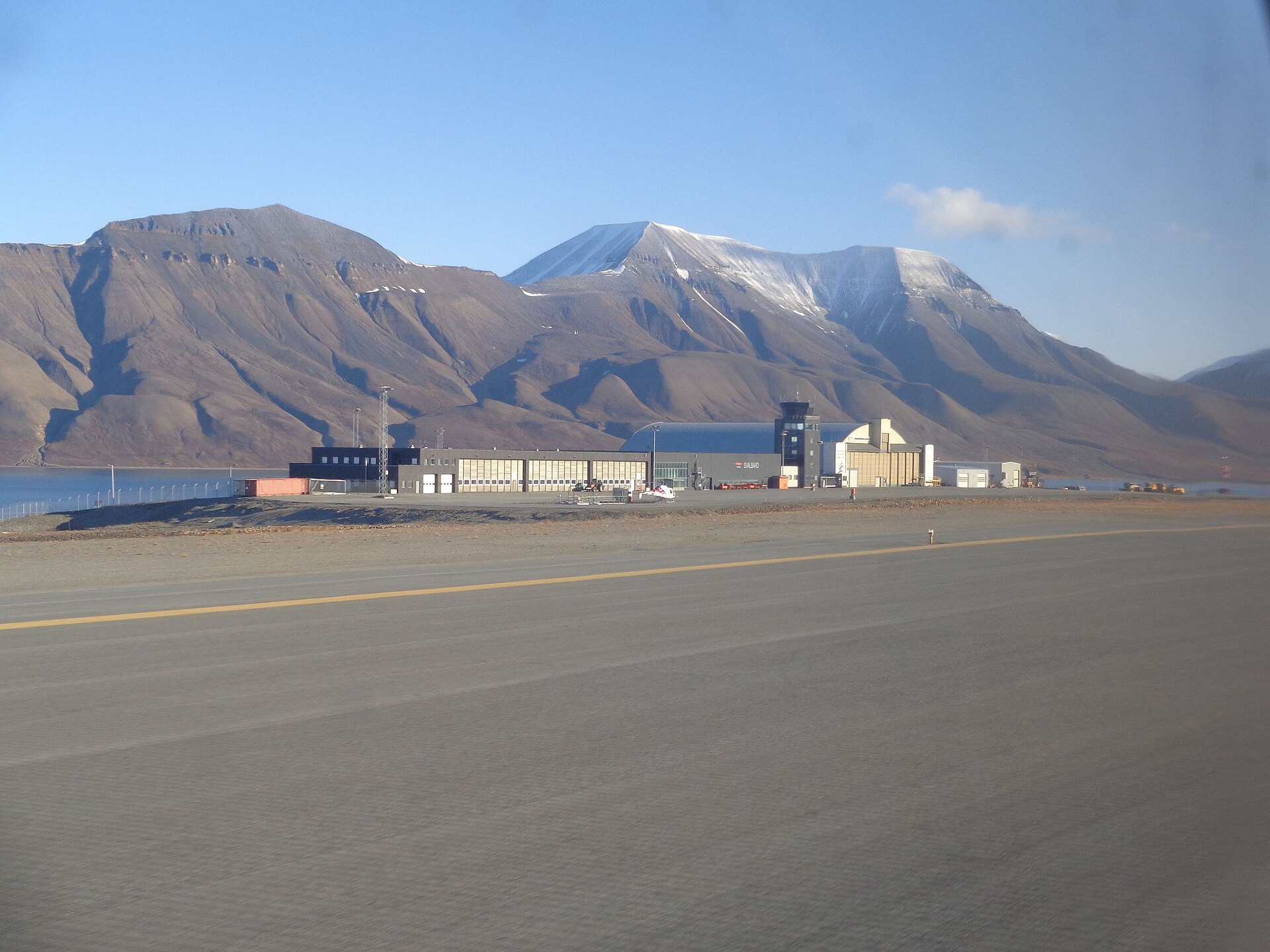
Longyearbyen sits at 78 degrees north on Svalbard, a Norwegian archipelago roughly 800 miles from the North Pole — one of the northernmost towns on Earth, home to around 2,000 people. It is famous for a rule that sounds made up: you are not allowed to die here. The truth is stranger than the myth — and far more practical.
Dying is not actually illegal in Longyearbyen. What is true is that the town stopped burying bodies decades ago, and the reason is underfoot. The ground is permafrost — frozen all year round — and it preserves whatever is put into it. In 1918, eleven people in town died of the Spanish flu and were buried in the local cemetery. Decades later, scientists examining the old graves found the remains preserved almost intact, and later research suggested that traces of the flu virus could still remain in preserved tissue. The cemetery was used until 1950, with 44 people buried there, and then closed to new burials. Today, if someone dies, the body is sent to mainland Norway for burial, and cremated remains can be kept locally only with permission. Terminally ill residents are usually flown to the mainland for end-of-life care — not because of any law against dying, but because the town's small hospital cannot handle major medical emergencies. The same logic applies to births: pregnant women are sent to the mainland, because the hospital cannot handle childbirth. It is not a ban on dying. It is a practical response to frozen ground and limited healthcare.
Longyearbyen was founded by an American, John Munro Longyear, whose Arctic Coal Company began mining there in 1906. The town now houses the University Centre in Svalbard, where students from around the world study glaciology, Arctic biology, and geophysics — and the coal is mostly history. Life here runs on rules that would sound absurd anywhere else. The sun disappears for about four months of polar night every year, and returns for months of midnight sun in summer. The ground beneath the town stays frozen year-round, so buildings stand on wooden or steel piles to stop their heat from melting the permafrost underneath. And anyone leaving the settlement is strongly advised to carry a rifle, because polar bears are a real and serious presence outside town. Svalbard has more polar bears than people — the wider Barents Sea population has been estimated at around 3,000 animals, with roughly 300 remaining around Svalbard — and visitors must keep at least 300 metres away from a bear, 500 metres between March and June. Shooting one is allowed only as a last resort when life is in danger, and any such incident is investigated afterwards.
A short distance from town, buried deep inside a mountain, sits the Svalbard Global Seed Vault — the famous underground facility that stores backup copies of seeds from gene banks around the world, in case of global catastrophe. Opened in 2008, it held more than 1.4 million seed samples by October 2026. It uses the same permafrost that preserves the town's dead to preserve the world's crops. Even the Seed Vault suffered a warning in 2017, when unusually warm weather and melting ice caused water intrusion near its entrance — a reminder that the frozen ground the whole town depends on is warming. Longyearbyen also has one more unusual rule: under the Svalbard Treaty, no one needs a visa or residence permit to live there — people of many nationalities can settle and work, which is part of why the town feels like a small United Nations at the top of the world.
Longyearbyen is what happens when people build a town in a place that refuses to cooperate — and then stay anyway, rewriting the rules of ordinary life around frozen ground, four months of darkness, and bears. The dead leave by plane, the seeds sleep in a mountain, and the living carry rifles to the supermarket. It is the strangest postcode on Earth, and it works.
Related on Poptani Labs: Giethoorn: the Dutch village with no roads — only canals, Whittier, Alaska: the town where almost everyone lives in one building, Coober Pedy: the Australian town that lives underground. More in this category: Around the World.
Sources: Outlook Traveller, Welcome To Longyearbyen: The Town Where You Cannot Die, Best of Nordic, Weird Things About Svalbard, The Positive Diary, Welcome to Longyearbyen

