On September 3, 1928, Scottish bacteriologist Alexander Fleming came back from a summer holiday to his laboratory at St Mary's Hospital in London, and started sorting through the petri dishes he had left on his bench. He was studying Staphylococcus, the bacteria behind boils, abscesses and wound infections. One dish looked wrong: a patch of mould had taken hold on it, and around the mould was a clear ring where the bacteria had simply stopped growing. Fleming didn't throw the dish away. That decision — to look twice at a contaminated plate — became the first antibiotic, and the beginning of modern medicine. This is a research-based piece: the history of a discovery, not a lab experiment.
Fleming's lab was famously cluttered, and the dish was headed for the sink. He had left several plates of Staphylococcus aureus growing on solid medium before his holiday, and this one had been contaminated by a microscopic fungus that formed a large colony on one side. What made it extraordinary was the halo: colonies close to the mould had gone transparent or vanished, while bacteria farther away kept growing. Today we call that clear ring the "zone of inhibition" — the visible signature of something killing bacteria at a distance. Fleming cultured the mould, filtered it out of the broth it grew in, and found the leftover liquid could still kill a wide range of dangerous bacteria, including the microbes behind pneumonia, meningitis and diphtheria, even diluted hundreds of times over. He first called the liquid "mould juice." Then he gave it a better name: penicillin.
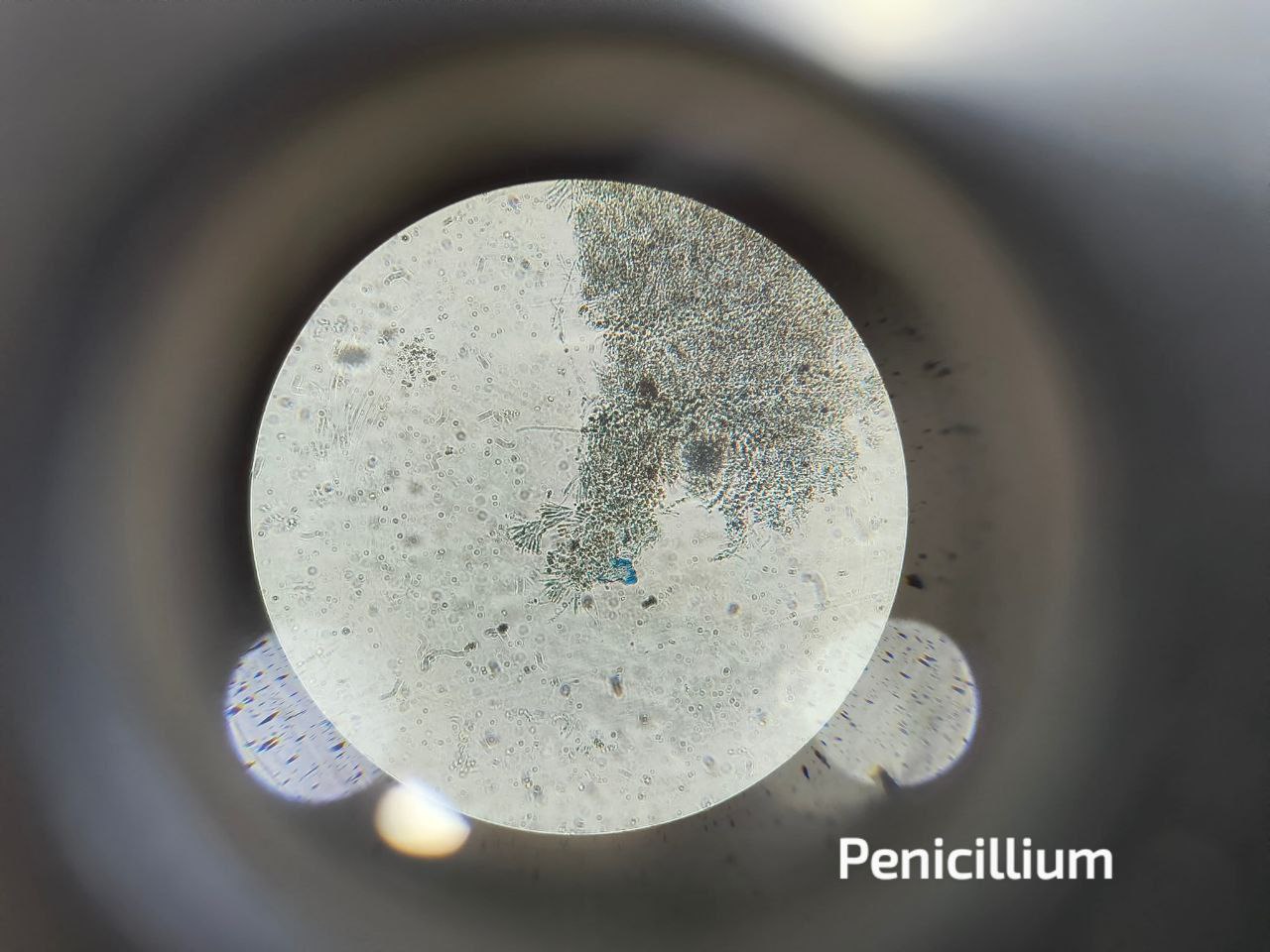
Fleming identified the invader as a mould of the genus Penicillium, known for decades as Penicillium notatum — modern genetic analysis has since reclassified his original isolate as Penicillium rubens. He published his findings in the British Journal of Experimental Pathology in June 1929. And then, almost nothing happened. The scientific community showed little enthusiasm: Fleming couldn't purify the substance or make it stable, and he moved on to other work. The paper sat largely unread for ten years. The discovery was real, but a discovery is not a drug — and nobody yet knew how to turn mould juice into medicine.
The rescue came from Oxford. In 1939, Howard Florey led a team at the Sir William Dunn School of Pathology — Ernst Chain, Norman Heatley, Edward Abraham and others — that set out to purify penicillin into something that could survive inside a patient. In May 1940 they ran the decisive test: eight mice infected with lethal doses of streptococcus, four treated with penicillin, four left untreated. The four treated mice lived; the four untreated mice died. On February 12, 1941, a 43-year-old policeman named Albert Alexander became the first patient to receive purified penicillin. He had scratched his face pruning roses, the wound had become infected, and the infection was spreading. Within 24 hours he was greatly improved — but supplies ran out before the infection was fully cleared, and he relapsed and died two weeks later. The drug worked; there just wasn't enough of it. Florey and Heatley flew to the United States that summer, and the US Department of Agriculture's laboratory in Peoria, Illinois, scaled up production. By D-Day in June 1944, Allied troops had penicillin. In 1945, Fleming, Florey and Chain shared the Nobel Prize in Physiology or Medicine.
Exactly how the spore reached Fleming's plate has never been settled. Fleming himself later speculated that it drifted in through an open window facing the street. Colleagues who worked in the building disputed that — his window was normally kept shut — and pointed instead to a mycology laboratory one floor below, run by Charles J. La Touche, as the likelier source of stray spores. The honest answer is that nobody knows, and it doesn't matter. What matters is the chain: a spore landed where it shouldn't have, a messy researcher noticed instead of discarding, and a decade later a team in Oxford finished what he started. Before penicillin, a scratch from a rose thorn or a routine surgery could turn fatal from infection. After it, the whole arithmetic of medicine changed.
Penicillin is the purest butterfly effect in science: one spore, one dirty dish, one researcher who looked twice instead of washing up. Nothing about the discovery was planned — not the contamination, not the ten-year wait, not the Oxford team that finished it. The lesson isn't that accidents do the work. It's that accidents only count if someone is paying attention when they happen.
Related on Poptani Labs: The missing hyphen that blew up a rocket to Venus, Feynman's glass of ice water: the 30-second demo that explained a disaster, How a microwave oven actually heats your food (and why metal sparks). More in this category: The Butterfly Effect.
Sources: Space-Travel.com, Fleming's mouldy dish and the antibiotic era, MedBound Times, Alexander Fleming and Penicillin, FactOTD, The Mold That Saved Millions, Weird Science History, The Moldy Petri Dish That Almost Got Thrown Away

