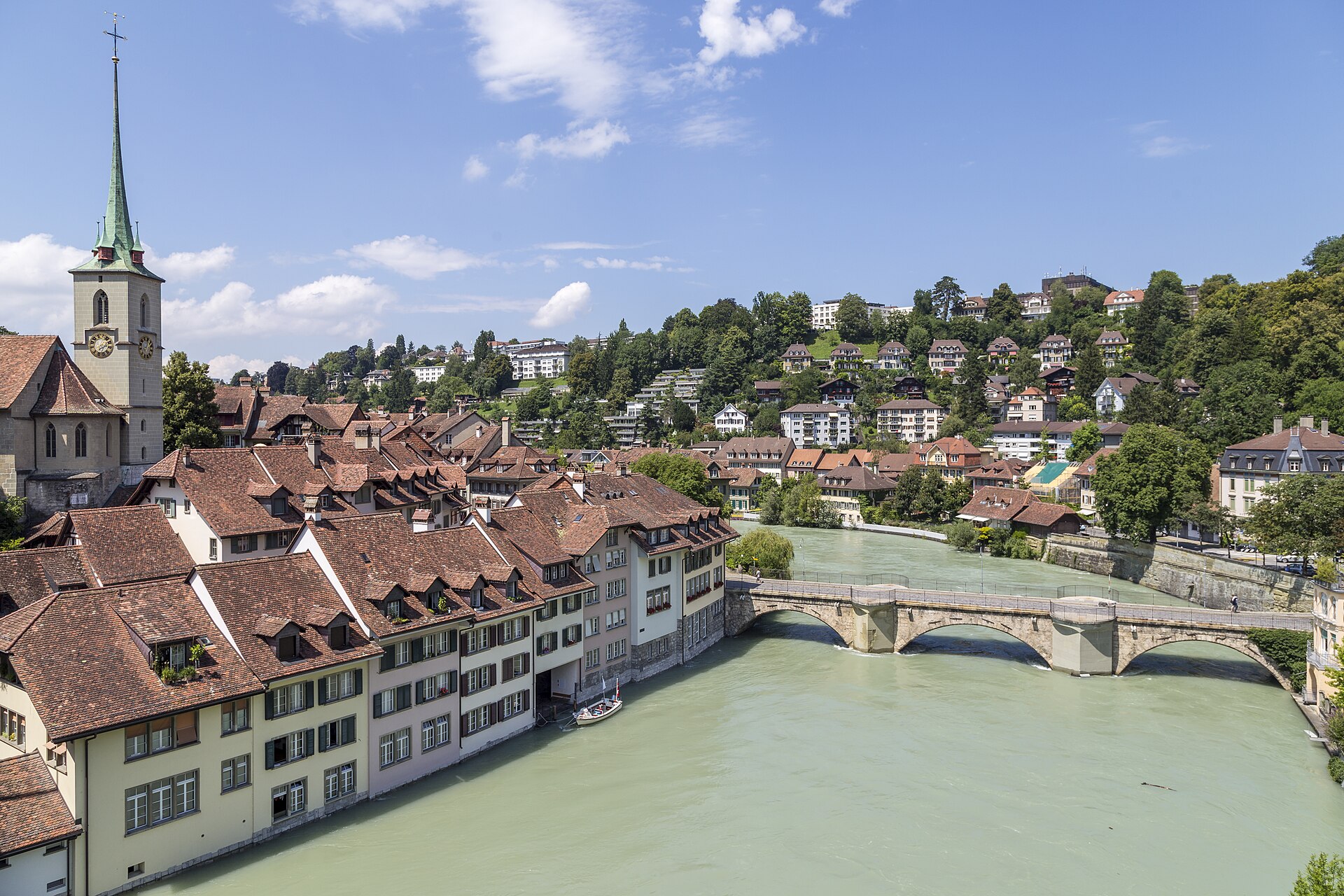
Ask anyone to name the capital of Switzerland and they will say Bern — and they will be right, and also wrong. Bern is where the parliament sits, where the government meets, and where the embassies are. But Switzerland has no official capital city. No law says so, no constitution names one, and the Swiss are quite deliberate about it. This is a research-based explainer, drawn from Swiss government sources and histories of the 1848 settlement — and the bear story below is a legend, told as one.
The decision was made on 28 November 1848, in the aftermath of revolution, when the new Swiss Federal Assembly had to choose a seat for the government of the brand-new federal state. The candidates were Zurich, Lucerne, and Bern. Zurich was the economic powerhouse, and that was the problem: the deputies did not want to concentrate all the power — political and economic — in one city. Lucerne had been part of the Sonderbund, the Catholic conservative alliance defeated in the civil war a year earlier, which counted against it. Bern won because it was central, because it had the support of the French-speaking cantons, and — the wonderfully practical detail — because it offered the necessary real estate for free. Bern became the "federal city", the Bundesstadt. But the constitution never called it the capital, and to this day no Swiss law does: the laws say only that the Federal Assembly meets in Bern, and that the official seat of the Federal Council, the departments, and the Federal Chancellery is the city of Bern. Everyone calls it the capital. The law carefully does not.
Here is the fun anecdote — the legend behind the name. The story goes that Bern was founded in 1191 by Duke Berthold V of Zähringen, who promised to name the new city after the first animal he caught on a hunt in the surrounding woods. That animal was a bear — Bär in German — and so the city became Bern, and the bear became its emblem. Bears still feature everywhere in the city, from the coat of arms to the Bärengraben, the bear pit where live bears have been kept for centuries. Whether the hunt happened exactly as told is lost to history, but the symbolism survived the legend: a city named for a wild animal, chosen as a seat of government precisely because it was not the biggest or the richest place in the country. And the deliberate spreading of power did not stop with Bern: the Federal Supreme Court sits in Lausanne, the Federal Criminal Court in Bellinzona — the judiciary, like the capital question itself, was designed so that no single city holds everything.
The absence of a capital is not an oversight; it is the point. Switzerland began in 1291 as a pact of mutual assistance between three cantons — a confederation, not a centralised nation — and that instinct never left. When the modern federal state was created in 1848, after a civil war between cantons that wanted to keep their sovereignty and those that wanted to federalise, the compromise was to build a government strong enough to hold the country together and weak enough not to threaten any canton. Naming a capital would have meant naming a winner. So the Swiss did what they are good at: they found a formulation everyone could live with. Bern would host the government, but it would be the federal city, not the capital — a distinction that has now held for 178 years, through two world wars and the creation of modern Switzerland.
The capital question is a small window into how the country works. Power in Switzerland is spread by design: across cantons, across languages, across institutions, and across cities. Decisions are made slowly, by consensus, and the system is built to prevent any one group from dominating the rest. It is inefficient in the way that democracies often are, and it is stable in the way that they rarely are. A country that cannot agree on a capital — and decides, instead, to simply not have one — has made a choice about what matters more: unity, or the appearance of it. The Swiss chose unity, and left the title blank.
Bern is the capital of Switzerland in every sense except the one that counts on paper — and that is exactly the point. A country built from cantons that refused to be ruled from a single centre could hardly have crowned one city above the rest. So the capital of Switzerland is nowhere, officially — and Bern, in practice, every single day.
Related on Poptani Labs: Singapore: how a country with no natural resources got rich, Antarctica: the continent with no country, no capital — and no permanent residents, Thimphu: the capital city with no traffic lights. More in this category: The World, Explained.
Sources: Bern (Wikipedia), Why Switzerland has no capital (House of Switzerland), Is Bern the capital of Switzerland? (I am Expat)

